

Collaborative account opening
Redesigned Morgan Stanley's investment account onboarding experience to reduce advisor dependency and support independent client completion. The redesign shipped to production across a 3-month engagement involving research, journey mapping, and high-fidelity prototyping.Company: Morgan Stanley '
Role: UX Designer
Timeline: 3 months
Team: Product manager, engineers, compliance stakeholders
Responsibilities: User research, journey mapping, interaction design, high-fidelity prototyping
The context
Opening an investment account is a high-stakes process involving regulatory requirements, financial disclosures, and multi-step documentation.
At Morgan Stanley, this process was heavily dependent on financial advisors guiding clients through a manual onboarding—creating inefficiencies for both sides.
I was tasked with digitizing this experience to better support independent client completion while reducing advisor overhead.

The problem
The existing onboarding experience created friction at multiple points:
Clients encountered complex financial and legal terminology too early
The process was long, manual, and difficult to complete in one session, often times had paperwork sent back
Advisors were frequently required to step in and guide users manually on phone
Errors in submissions led to rework and delays in account creation
This resulted in a system that didn’t scale well and increased operational burden.
Constraints
Designing in a financial environment introduced important constraints:
Regulatory requirements limited how content could be simplified
Compliance approval was required for any changes to financial language
Existing backend workflows restricted how data could be structured
The experience had to support both clients and financial advisors
These constraints required balancing usability with accuracy and legal clarity.
Objective
Design a more intuitive and flexible onboarding experience that:
Helps users navigate complex financial inputs with confidence
Reduces drop-off in multi-step flows
Enables asynchronous completion
Minimizes advisor intervention without removing necessary oversight

Research
To better understand the existing onboarding process, I conducted Two qualitative research sessions with multiple financial advisors from Morgan Stanley and recent hirers from Merrill Lynch who regularly helped clients open accounts.
Research questions:
Roles and responsibilities?
Where do clients get stuck in the onboarding process?
Which steps require the most advisor assistance?
What causes clients to abandon the flow?
If you were a client would you understand this language?
Key insights:
Insight 1: Complexity introduced too early
Users were asked to complete regulatory and financial disclosures before understanding the broader process.
This created early confusion and hesitation
Insight 2: Advisors filled UX gaps
Advisors frequently acted as interpreters of the product, explaining terminology and guiding users through unclear steps.
The product was not self-sufficient
Insight 3: Uncertainty led to abandonment
When users didn’t understand a question or lacked information, they often exited rather than continued.
The flow lacked recovery and flexibility
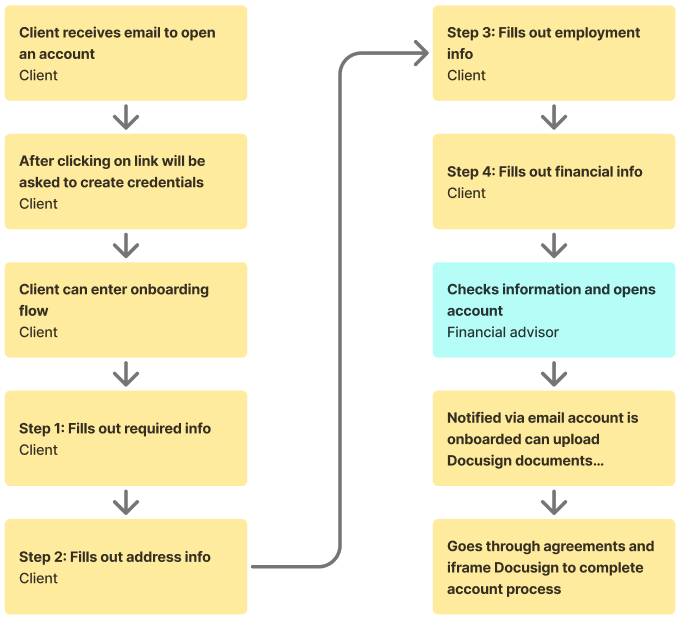
User journey
Design principles
From my research insights, I defined three guiding principles:
1. Sequence for confidence
Structure the flow to build momentum before introducing complexity
2. Guide without interrupting
Provide contextual help without breaking the user’s flow
3. Support non-linear completion
Allow users to pause, resume, and complete tasks asynchronously
Designs
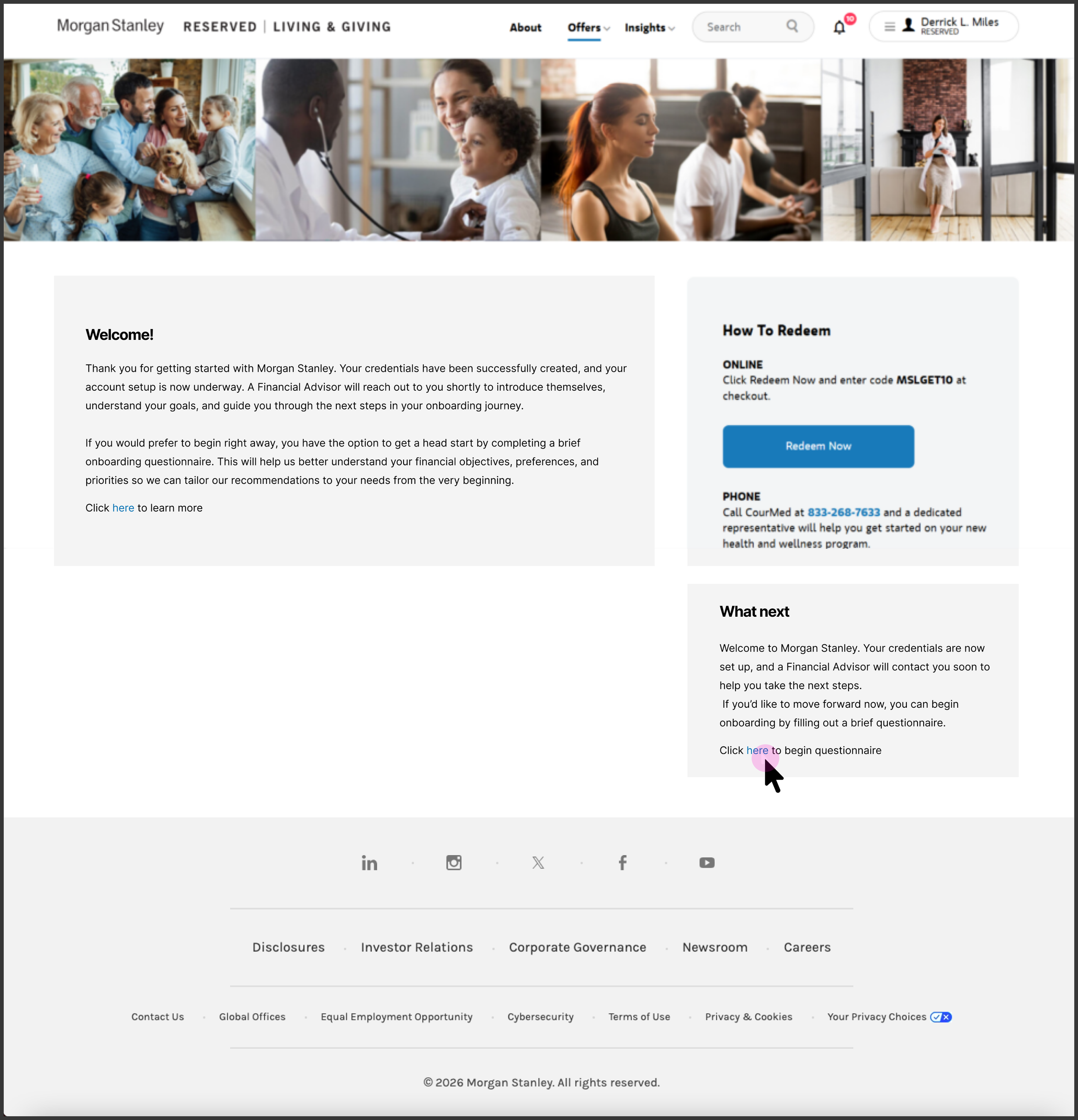
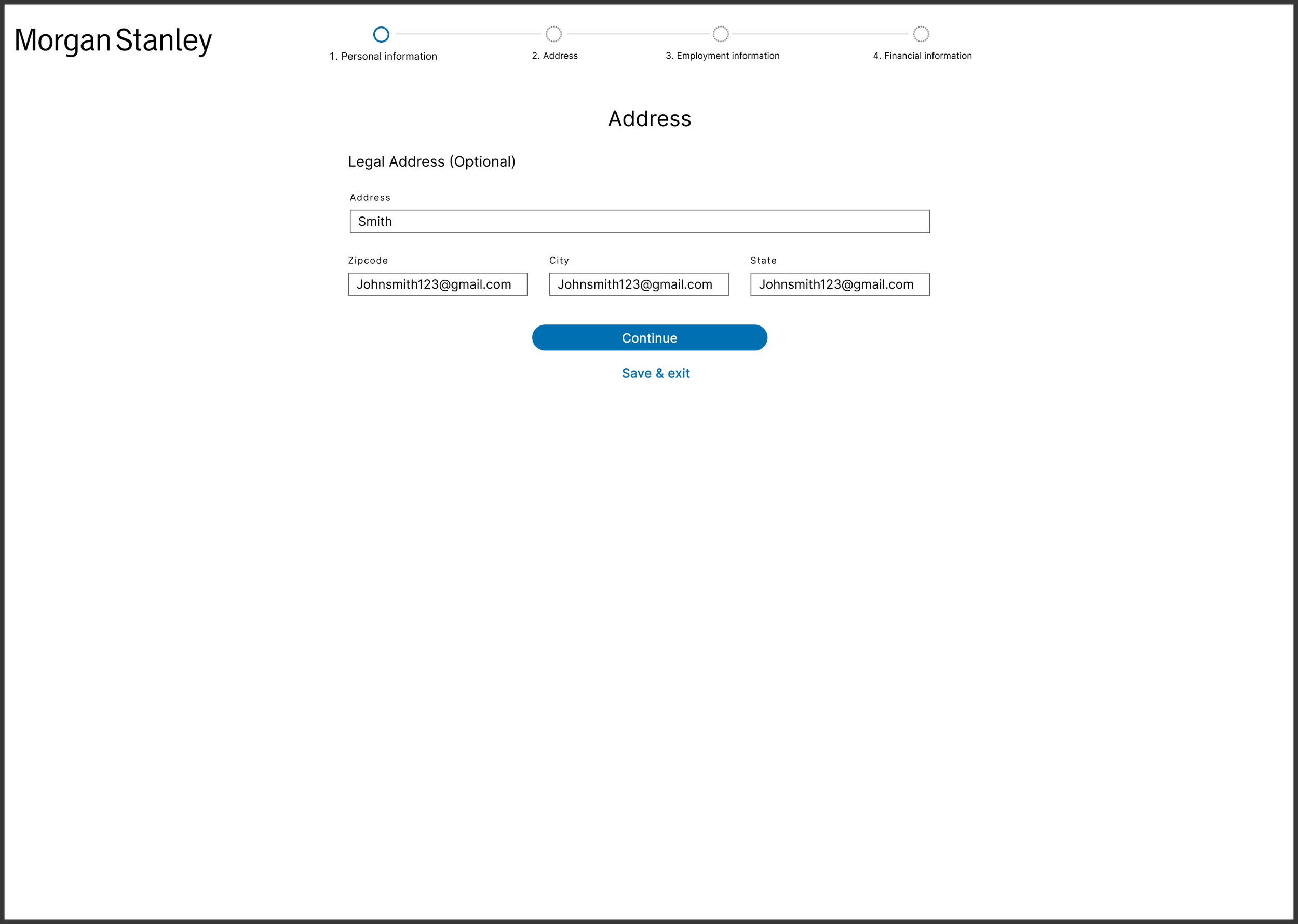
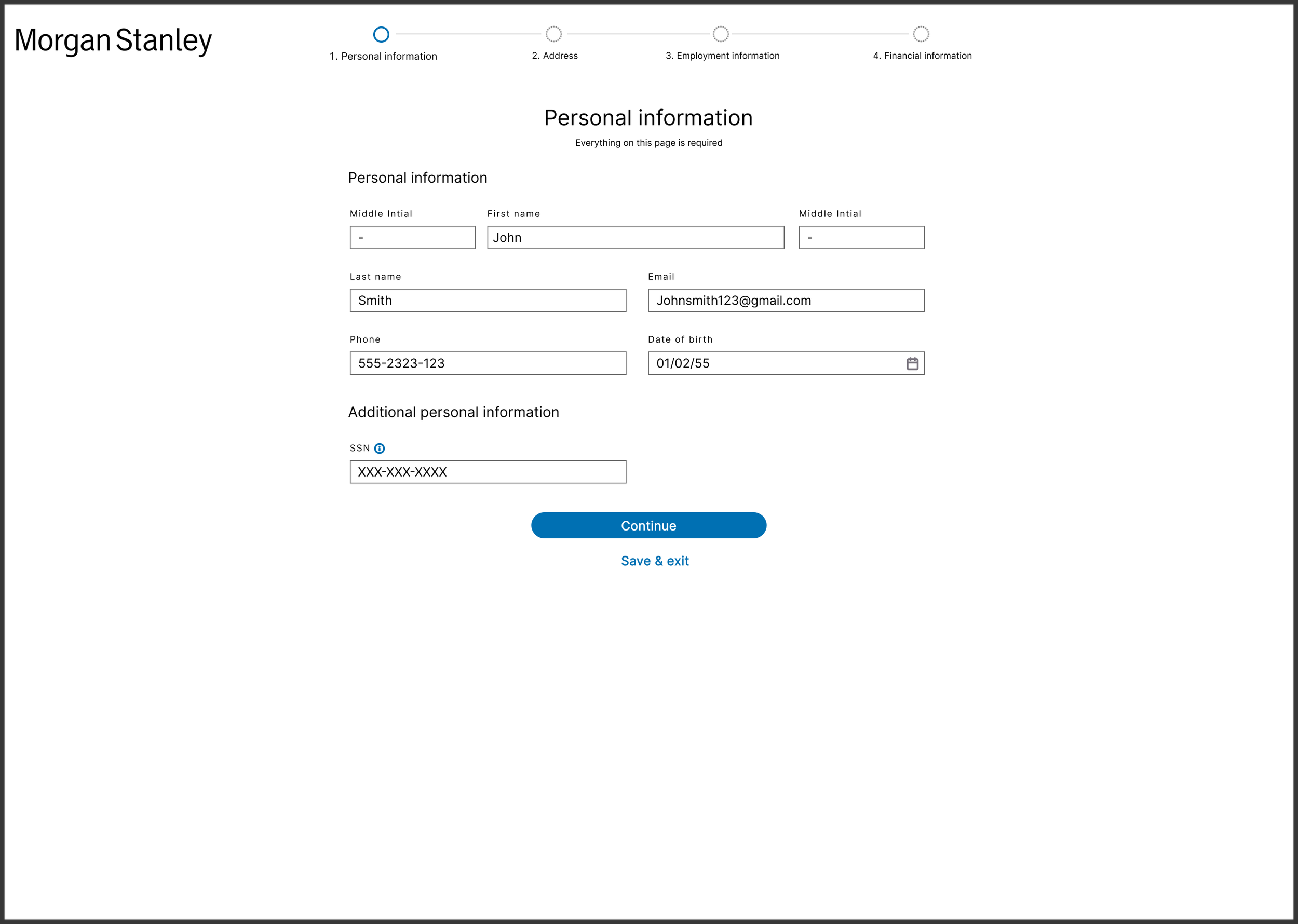
Key design decisions
-
![]()
1. Reordering the onboarding flow
I restructured the experience to prioritize simple, high-confidence inputs first, delaying more complex financial questions.
This helped users build momentum and better understand the process before encountering difficult steps.
Why it mattered:
Reducing early cognitive load increased the likelihood that users would continue deeper into the flow. -
![]()
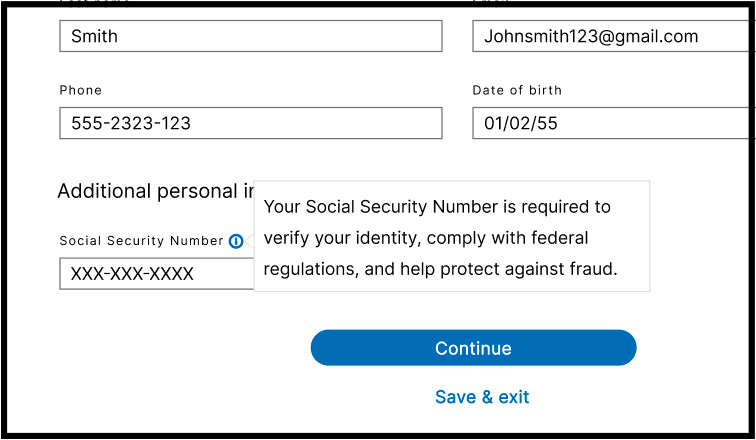
2. Contextual guidance for financial terminology
I introduced tooltips and inline helper text for complex terms such as net worth and regulatory disclosures.
Instead of overwhelming users upfront, guidance appeared only when needed.
Why it mattered:
This reduced confusion while preserving the integrity of required financial language. -
![]()
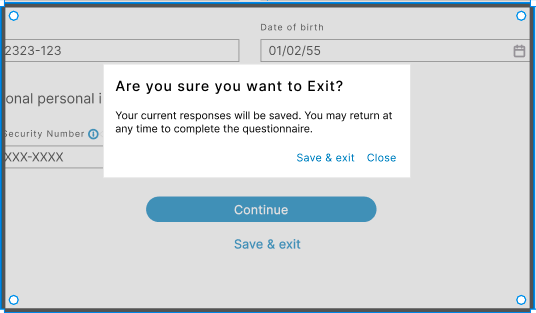
3. Save and resume functionality
I designed a system that allowed users to save progress and return later, acknowledging that onboarding often requires gathering information.
Why it mattered:
This removed the pressure to complete everything in one session and supported real-world user behavior. -
![]()
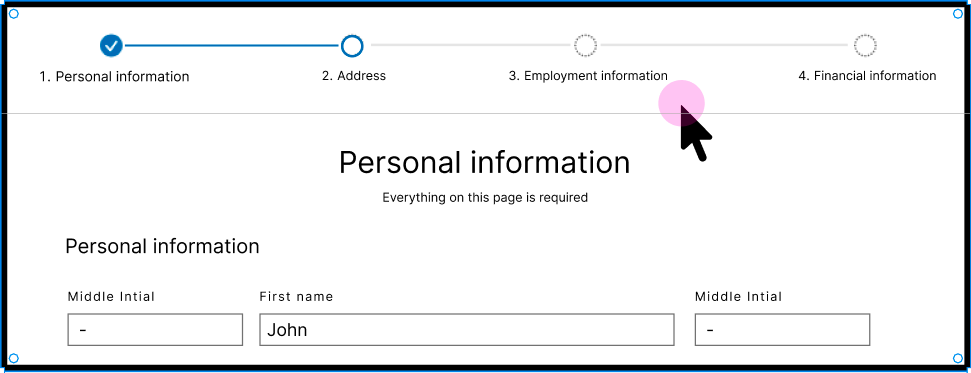
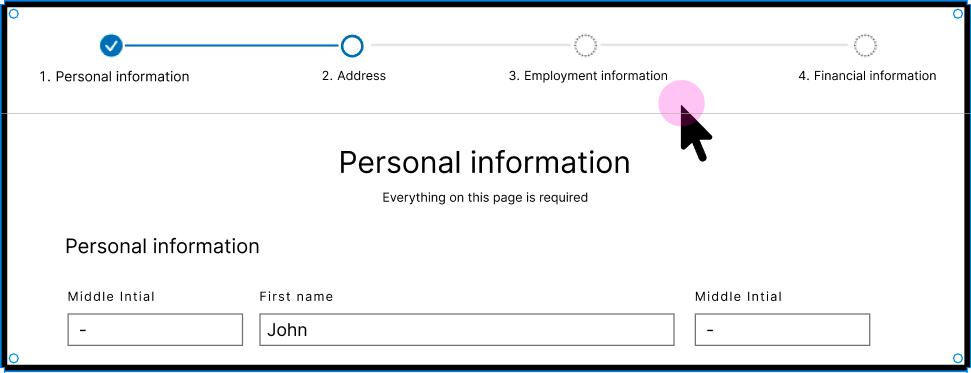
4. Improving flow transparency
I introduced clearer progress indicators and step organization to help users understand where they were in the process.
Why it mattered:
Reducing ambiguity helped users feel more in control and less likely to abandon the flow.
Design artifacts
Throughout the project I created several artifacts to guide the design and development process:
User journey maps of the onboarding experience
Flow diagrams mapping the account creation process
Interaction designs for key onboarding steps
High-fidelity prototypes used for engineering handoff
These prototypes were shared with product and engineering teams to support implementation.
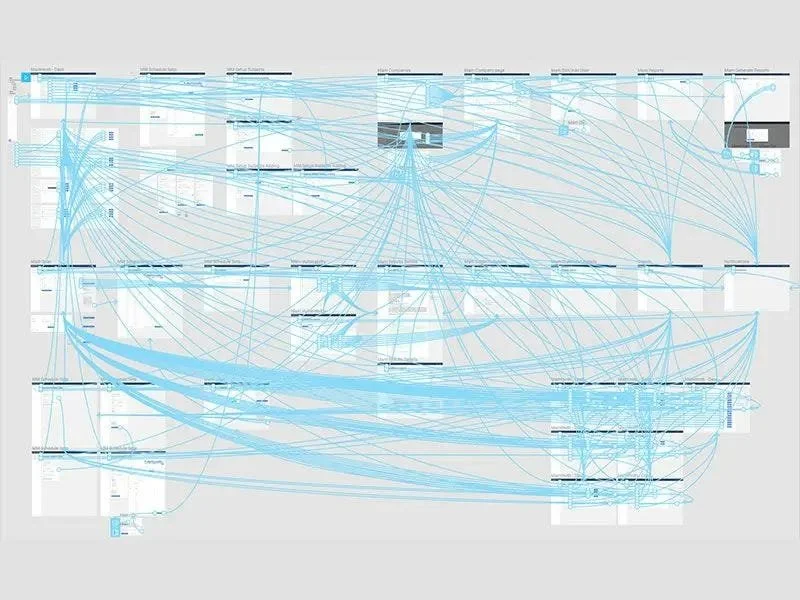
Prototype
Outcome
The redesigned onboarding experience shipped to production, improving the end-to-end account opening flow for both clients and financial advisors.
Key improvements delivered:
Clients could complete onboarding independently without needing to call their advisor for guidance
Complex financial and regulatory inputs were resequenced to reduce early drop-off
Save-and-resume functionality removed the pressure of single-session completion
Advisor intervention shifted from routine guidance to exception handling only
Final designs were delivered as high-fidelity prototypes with full interaction specs for engineering handoff, and the experience reached production within the project timeline.
Edge cases & system thinking
Because this was a collaborative onboarding experience, I accounted for scenarios such as:
Collaborators not accepting invitations
Users with non-standard financial situations (e.g., students, retirees)
Incorrect or incomplete submissions
Temporary or non-permanent address inputs
Designing for these cases ensured the system remained resilient and prevented stalled applications.
Reflection
This project highlighted that complexity in financial products isn’t just unavoidable, and that complexity must be intentionally managed. Rather than removing complexity, I focused on sequencing and contextualizing it, allowing users to build understanding progressively. This shift transformed the onboarding experience from something users needed help to complete into something they could navigate with confidence.
Confidentially note
Due to confidentially agreements with Morgan Stanley, product visuals have been removed or simplified.