

AI hackathon
Overview:
Designed an AI-assisted "Notify of Death" experience for E*TRADE during a 1-week internal Morgan Stanley hackathon. The concept advanced through two rounds of voting and received funding — validating both the UX approach and its business potential.This journey is both emotionally sensitive and operationally complex, requiring users to navigate documentation, compliance requirements, and account management during a difficult time.
Our goal was to design a more supportive, transparent workflow that simplifies this process while leveraging AI to guide users through each step.
Company: E*TRADE
Project type: Internal Hackathon
Role: UX Designer
Timeline: 1 week
Team: Cross-functional hackathon team (design + engineering)
Responsibilities: Led the interaction design for the AI-assisted experience, defined conversation flows, created an interactive high fidelity prototype used for the final demo, and worked with engineers through implementation.
The problem
Reporting the death of an account holder is often confusing, time-consuming, and emotionally overwhelming. Users must navigate legal and financial requirements with limited guidance during a highly stressful moment.
Key challenges:
Unclear documentation requirements (e.g., death certificates)
Difficulty finding the correct support channels
Limited visibility into status updates and next steps
Urgent compliance requirements needed to secure accounts, creating additional pressure and friction
The goal
Design a streamlined “Notify of Death” experience that:
Clearly communicates required documentation
Guides users through submission step-by-step
Enables fast and secure account protection
Provides empathetic, accessible support throughout the process
Given the one-week timeline, we focused on delivering a clear, high-impact happy path supported by a working prototype.
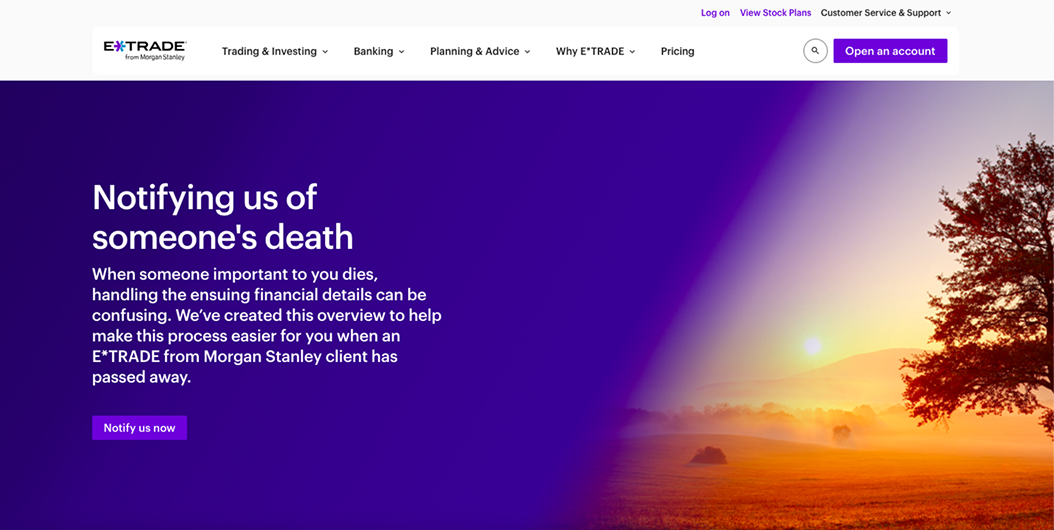
Before
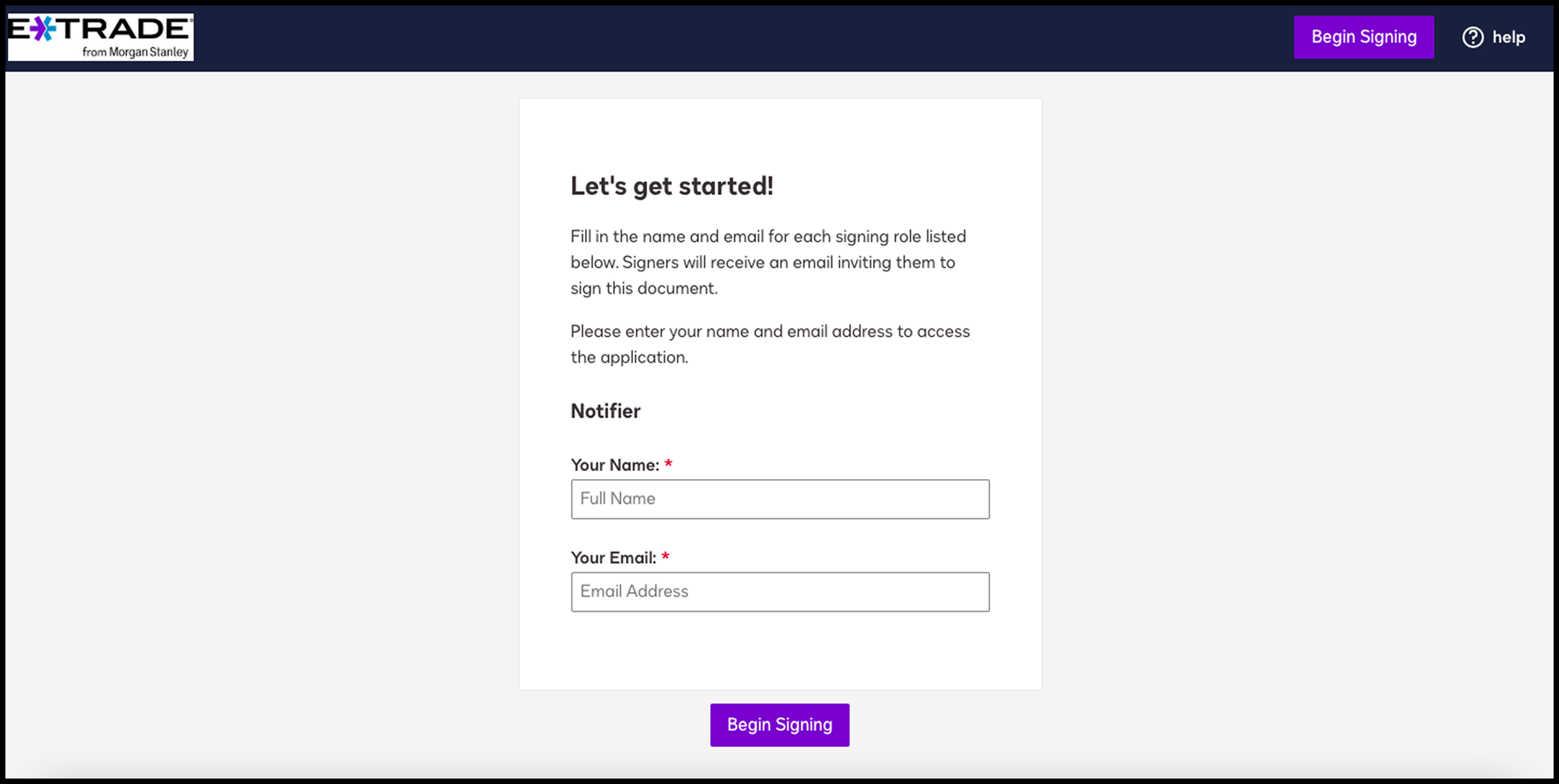
Users were redirected away from the platform, creating friction and increasing drop-off during a critical and sensitive process. The system also used a legacy design system that created friction as well.
After
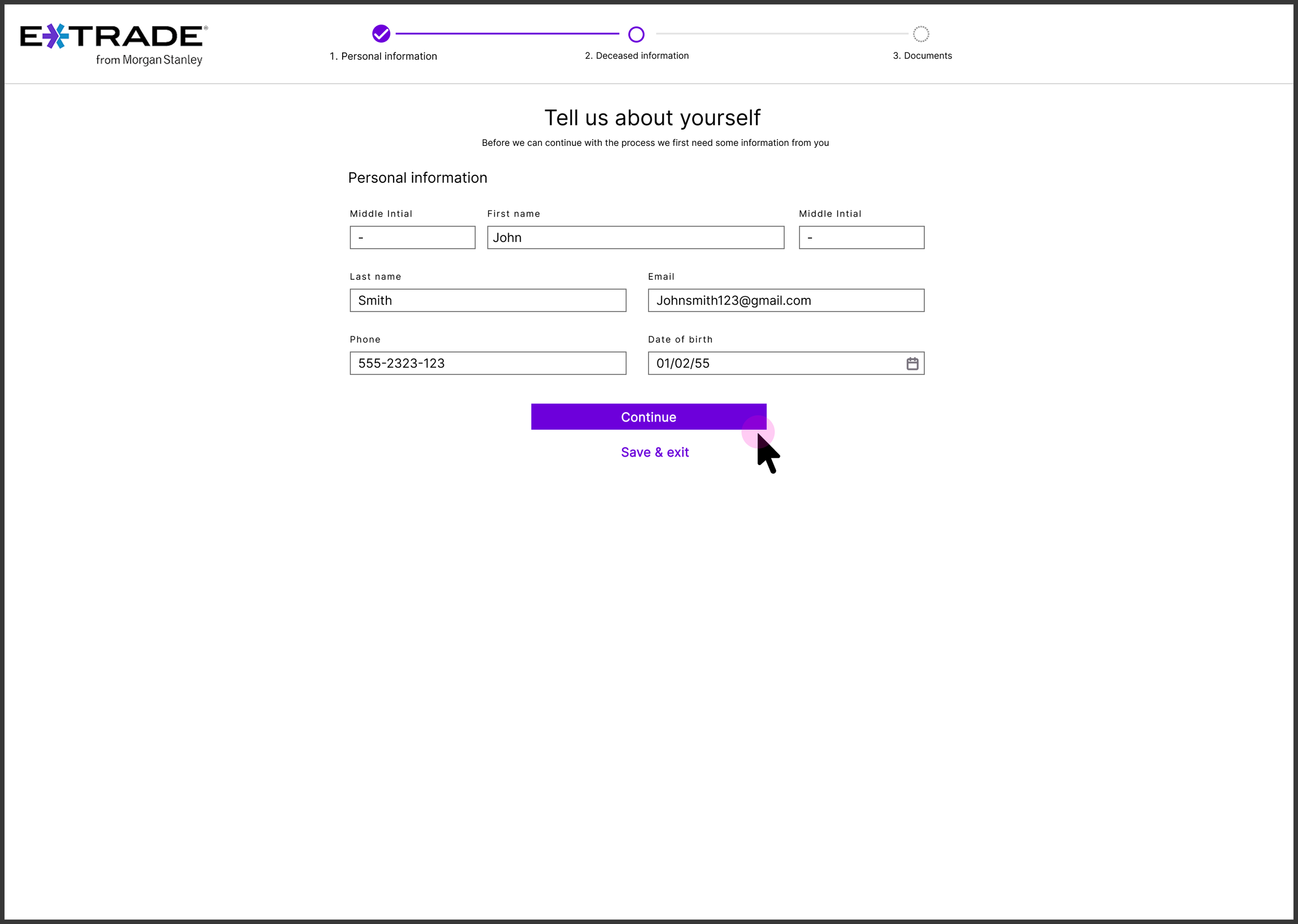
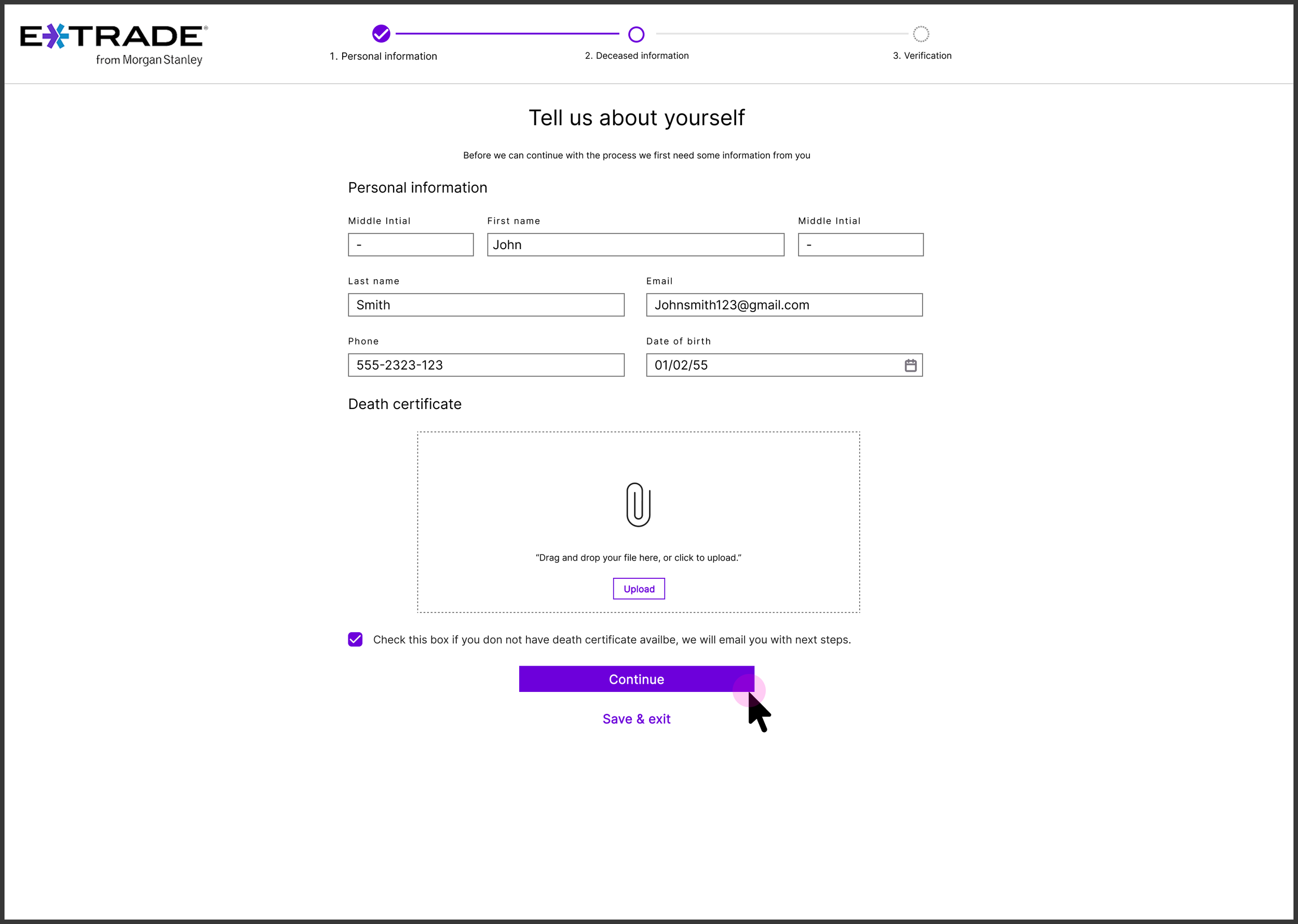
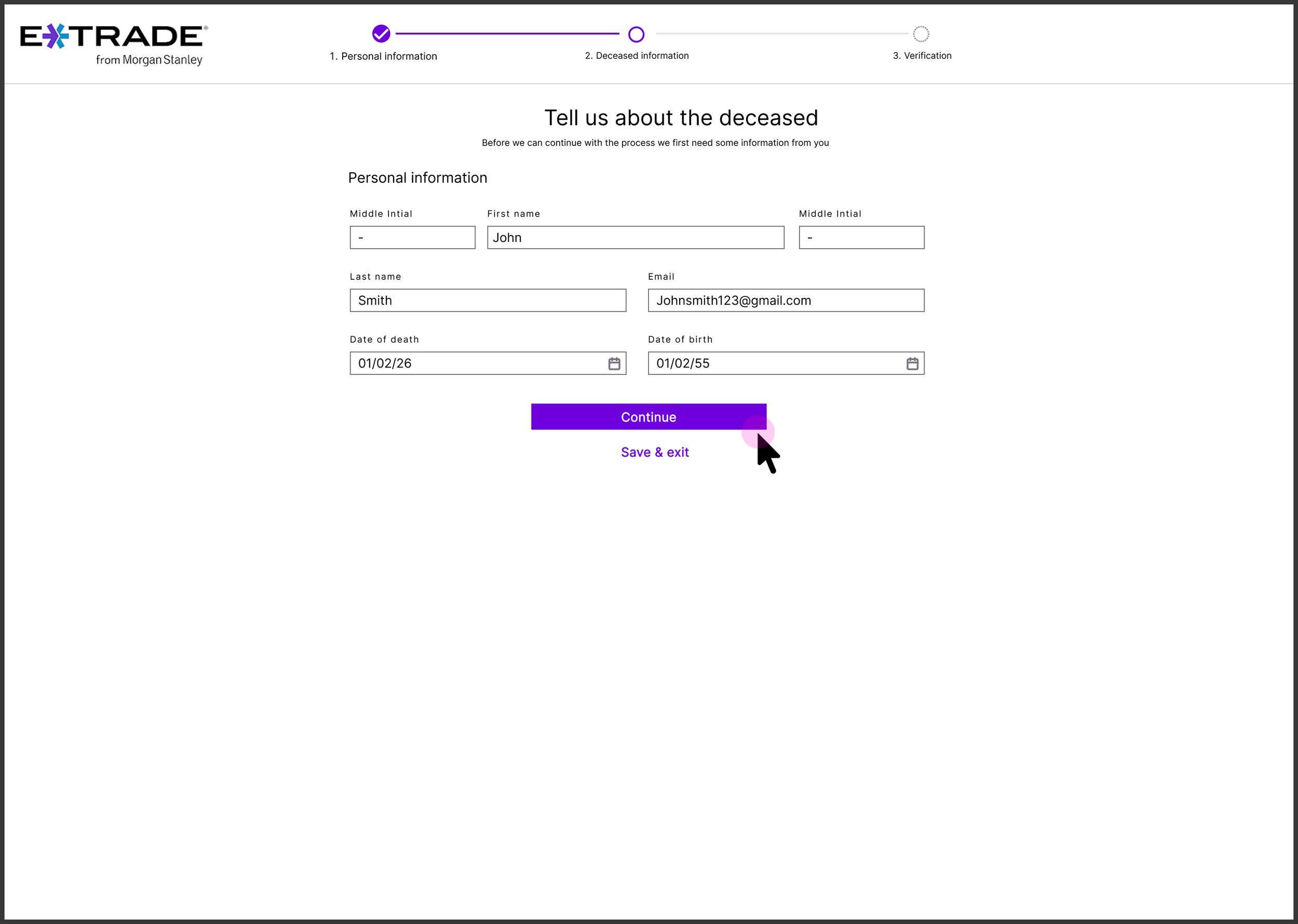
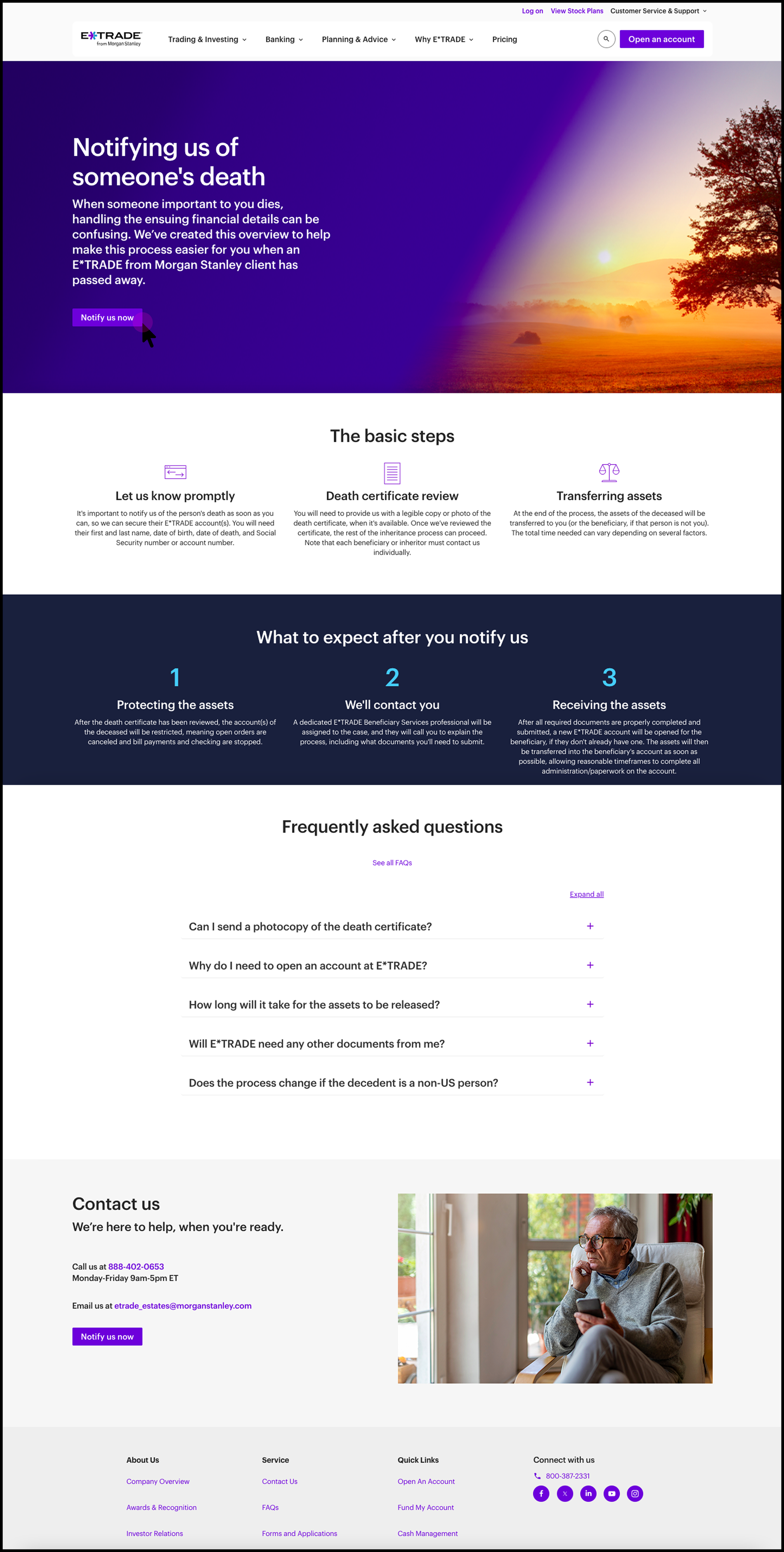
We redesigned the experience to stay within E*TRADE, reducing friction and keeping users in a familiar environment during a sensitive process. The flow first verifies beneficiary status, then guides users step-by-step through reporting and documentation, while initiating account protection in parallel. This approach was shaped with Risk and Compliance to ensure both usability and regulatory alignment.
Design strategy
Given the time constraint, we prioritized clarity, speed, and feasibility.
Approach:
Mapped the end-to-end Notify of Death journey
Identified key user pain points and failure moments
Designed a guided, step-by-step submission flow
Introduced AI to provide contextual, real-time support
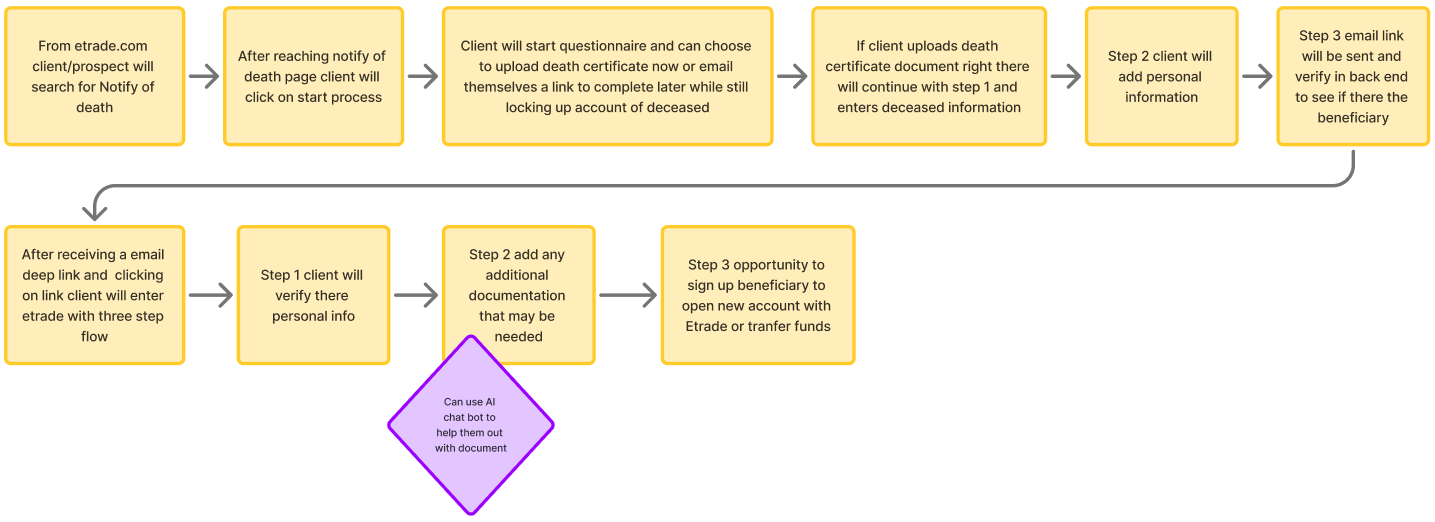
User flow (happy path)
Key design concepts
-
Users often lacked clarity on what was required of them.
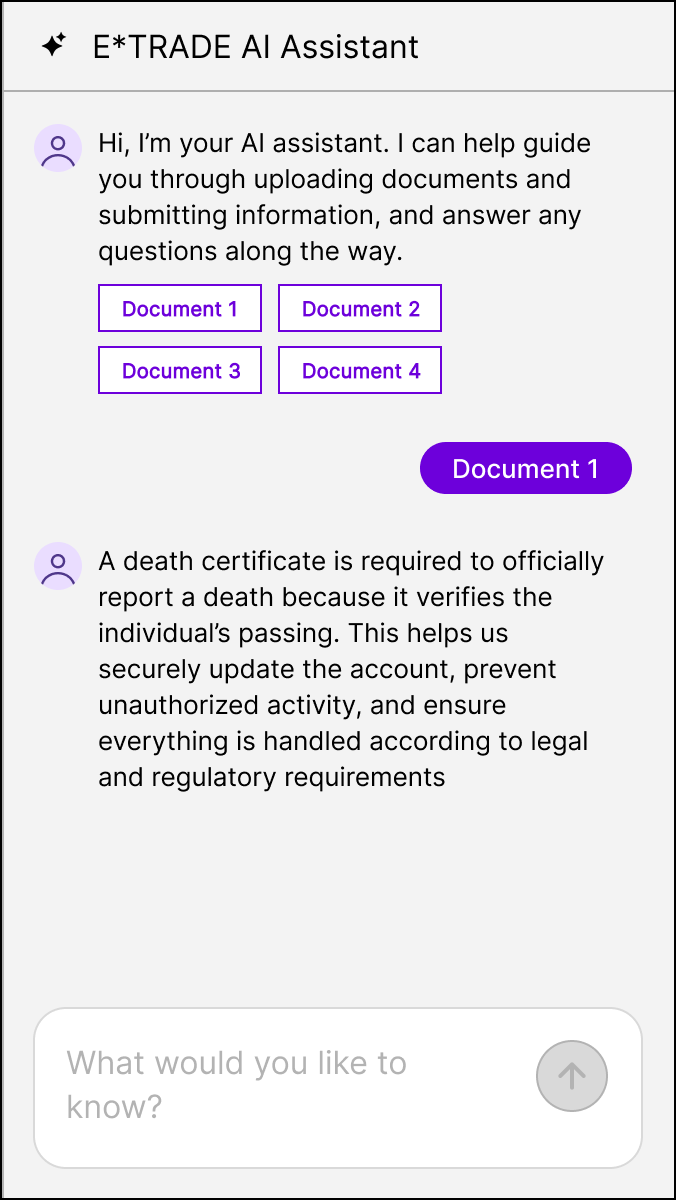
We introduced an AI assistant embedded within the workflow to:
Explain required documentation
Answer common questions in real time
Guide users through each step of the process
This reduced reliance on support channels while increasing user confidence.such as death certificates
Provide guidance on the notification process
Answer common questions related to estate reporting
This allowed users to receive assistance without needing to contact a representative immediately.
-
We transformed a fragmented process into a structured experience:
Report the death of an account holder
Upload required documentation
Provide beneficiary/contact information
Submit for review
Breaking the process into clear steps made it more approachable and less overwhelming.
-
To address compliance risks, we designed a way for beneficiaries to quickly secure accounts.
Enabled immediate account locking after notification
No account creation required (per compliance constraints)
This balanced security needs with user accessibility.
-
To reduce uncertainty, we introduced:
A stepper to show progress
Clear instructions and expectations
Improved form usability
These changes helped users feel more in control during a stressful process.
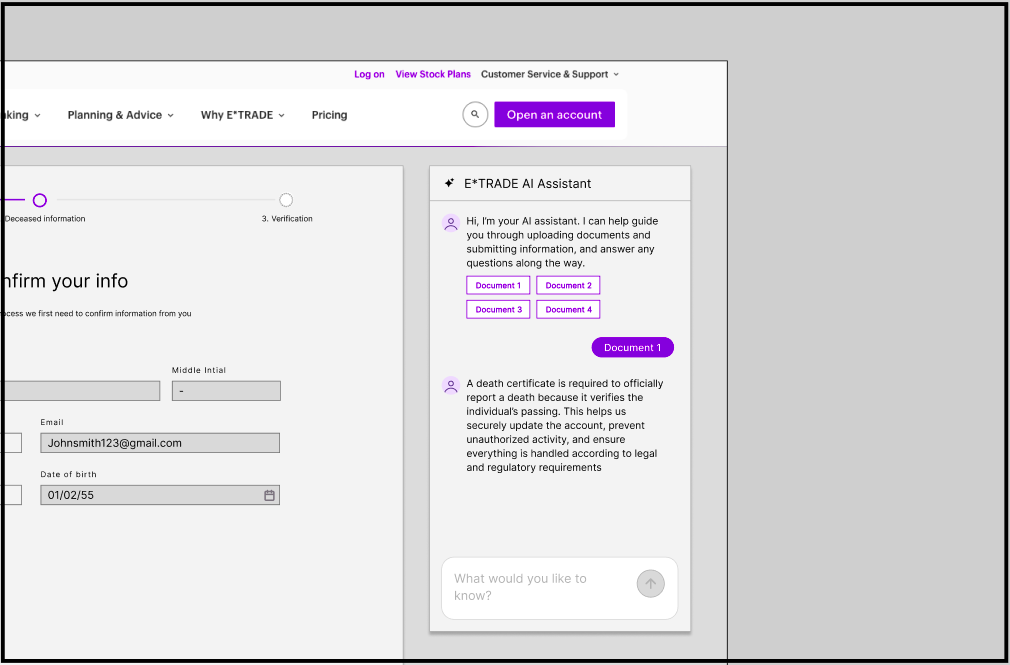
AI Chatbot
Designing the AI experience
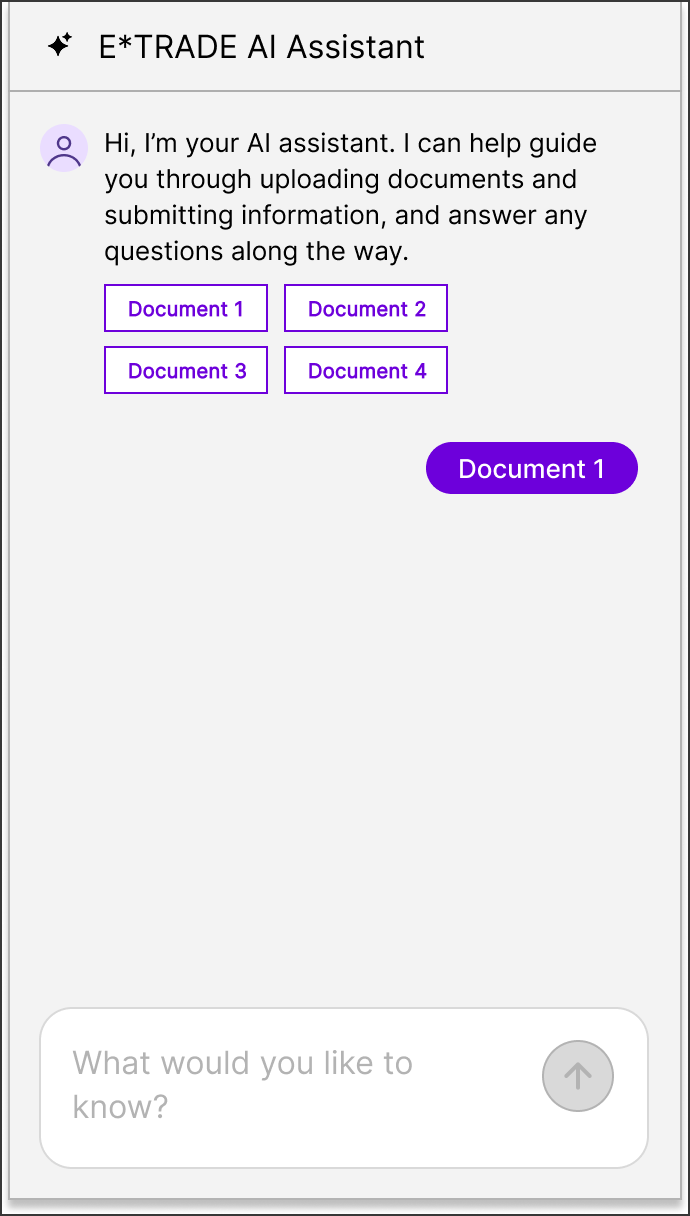
The AI assistant was designed as a contextual guide embedded within the workflow, helping users navigate documentation, understand next steps, and complete a complex process with clarity and confidence.
Role of the AI in the Experience
The AI functioned as an embedded assistant within key steps of the workflow rather than a standalone chatbot. Its role was to reduce uncertainty by providing timely, contextual guidance without disrupting the user flow.
AI-enhanced tooltips: exploring interaction patterns
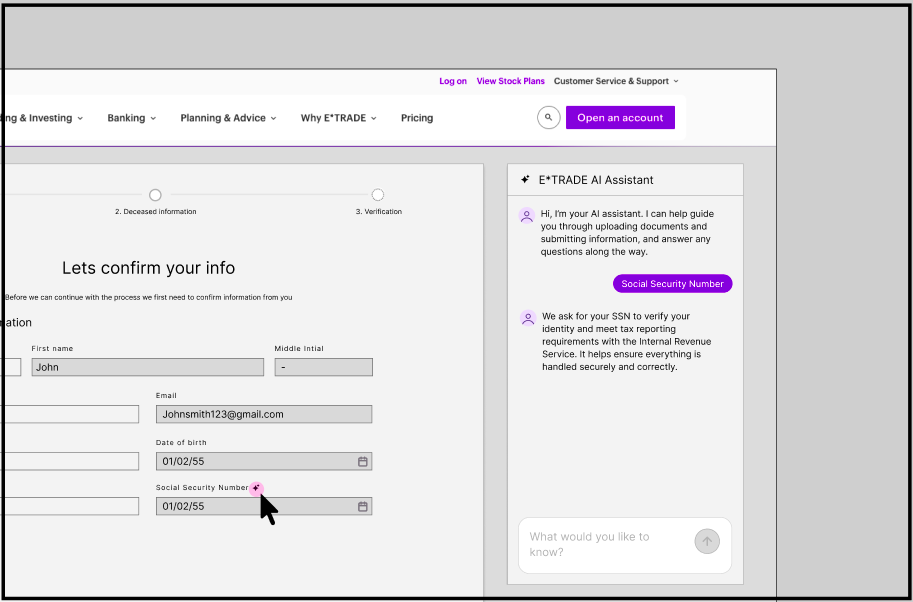
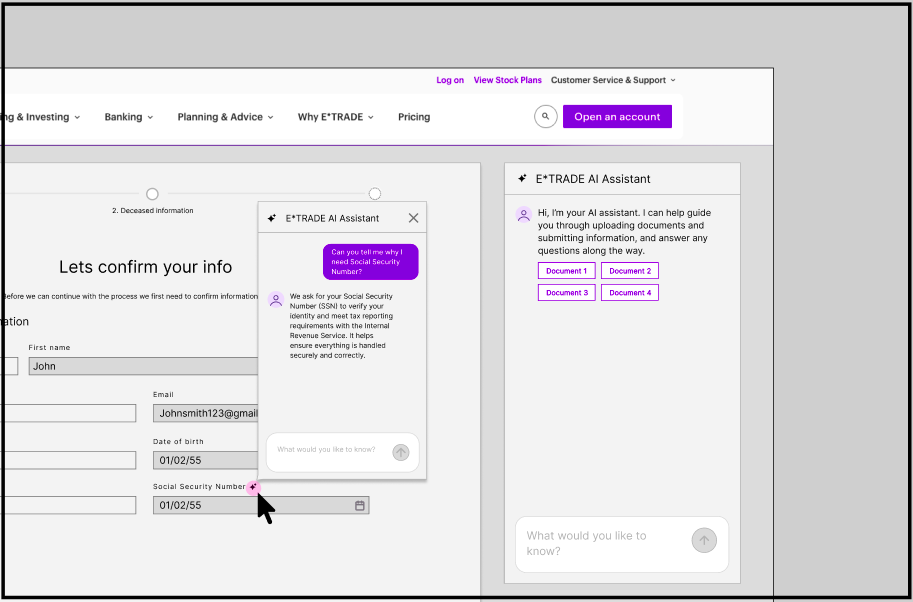
To improve how users access help in a complex, sensitive workflow, we explored replacing static tooltips with AI-powered assistance, we evaluated two interaction patterns:
-
![]()
Option A: side panel chatbot integration
- Triggers the existing chatbot in the right-hand panel
- Supports deeper, multi-turn conversations
- Keeps AI interactions consistent across the product
-
![]()
Option B: inline AI tooltip (selected)
- Replaces tooltips with an AI icon
- Opens a contextual, tooltip-based chat in place
- Allows quick questions without leaving the flow
Decision
We selected the Option B(Inline): keeping users anchored in their current context and reducing interaction friction. Embedding AI directly at the point of need allows for faster, more intuitive support without requiring users to shift attention to a separate interface.
User intent model
The AI experience was structured around key user intents:
Understanding required documentation
Learning what happens after submission
Determining eligibility to report a death
Getting help with account-related actions
These intents shaped the structure and tone of responses.
Interaction principles
The AI prioritized structured, guided responses over open-ended conversation.
Design principles included:
Clarity over flexibility
Structured guidance over generative responses
Reduced cognitive load in high-stress moments
Alignment with compliance and financial risk constraints
Design artifacts
Due to the short hackathon timeline, the project focused on wireframes and workflow design rather than high-fidelity UI.
Artifacts produced included:
High-fidelity wireframes for the submission flow
Interaction concepts for the AI assistant
A happy-path prototype demonstrating the full experience
Designs
-
![]()
AI chat bot
-
![]()
Questionnaire deceased information
-
![]()
Questionnaire personal information
-
![]()
Home page
-
![]()
AI Chat bot
-
![]()
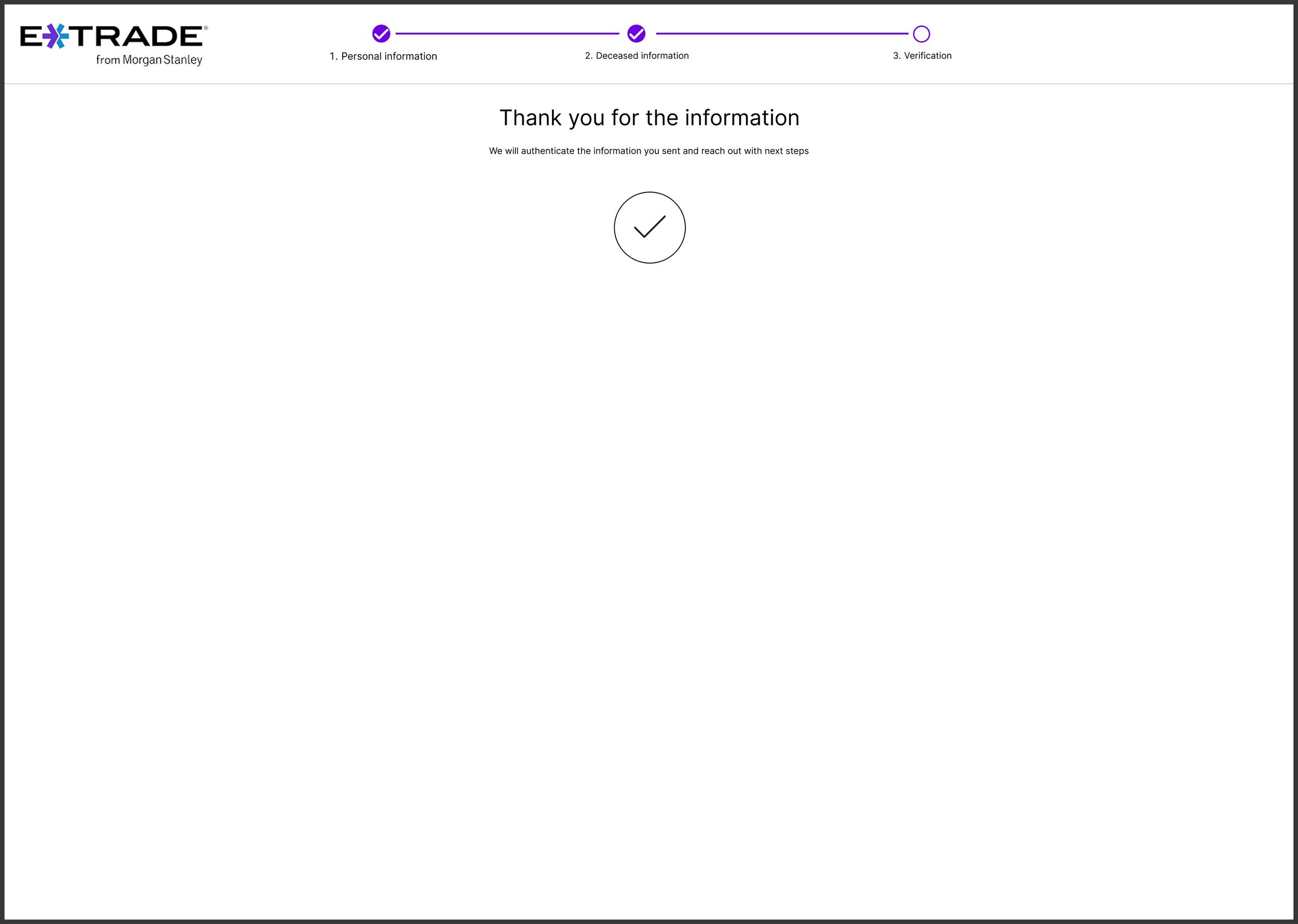
Confirmation page
Outcome
The project advanced through two rounds of internal voting at the Morgan Stanley AI Hackathon and received funding — a strong signal of alignment with both user needs and business priorities.
Key contributions:
Redesigned a fragmented, redirect-heavy experience into a guided in-platform flow
Introduced an inline AI assistant at the point of need, reducing reliance on support channels
Delivered a working high-fidelity prototype used in the final demo
Worked with Risk and Compliance to ensure the solution met regulatory requirements
While full implementation was beyond the scope of the hackathon, the concept demonstrated how AI-assisted guidance can simplify operationally complex financial processes during emotionally sensitive moments.
Reflection
This project reinforced the importance of designing at the intersection of usability, emotional sensitivity, and regulatory constraints. Even within a one-week sprint, focusing on the core user journey allowed us to deliver a solution with meaningful impact and explore how AI can enhance both user experience and operational efficiency.
Confidentially note
Due to confidentially agreements with Morgan Stanley Product visuals have been removed or simplified.